Diabetic Foot Ulcers: Early Warning Signs You Should Not Ignore
For someone living with diabetes, the feet deserve special attention. A diabetic foot ulcer is an open wound, most often on the bottom of the foot, and it is one of the most common reasons people with diabetes end up in the hospital. The encouraging part is that these wounds are highly treatable when they are caught early.
The challenge is that they rarely announce themselves with pain.
Why diabetic foot ulcers start quietly
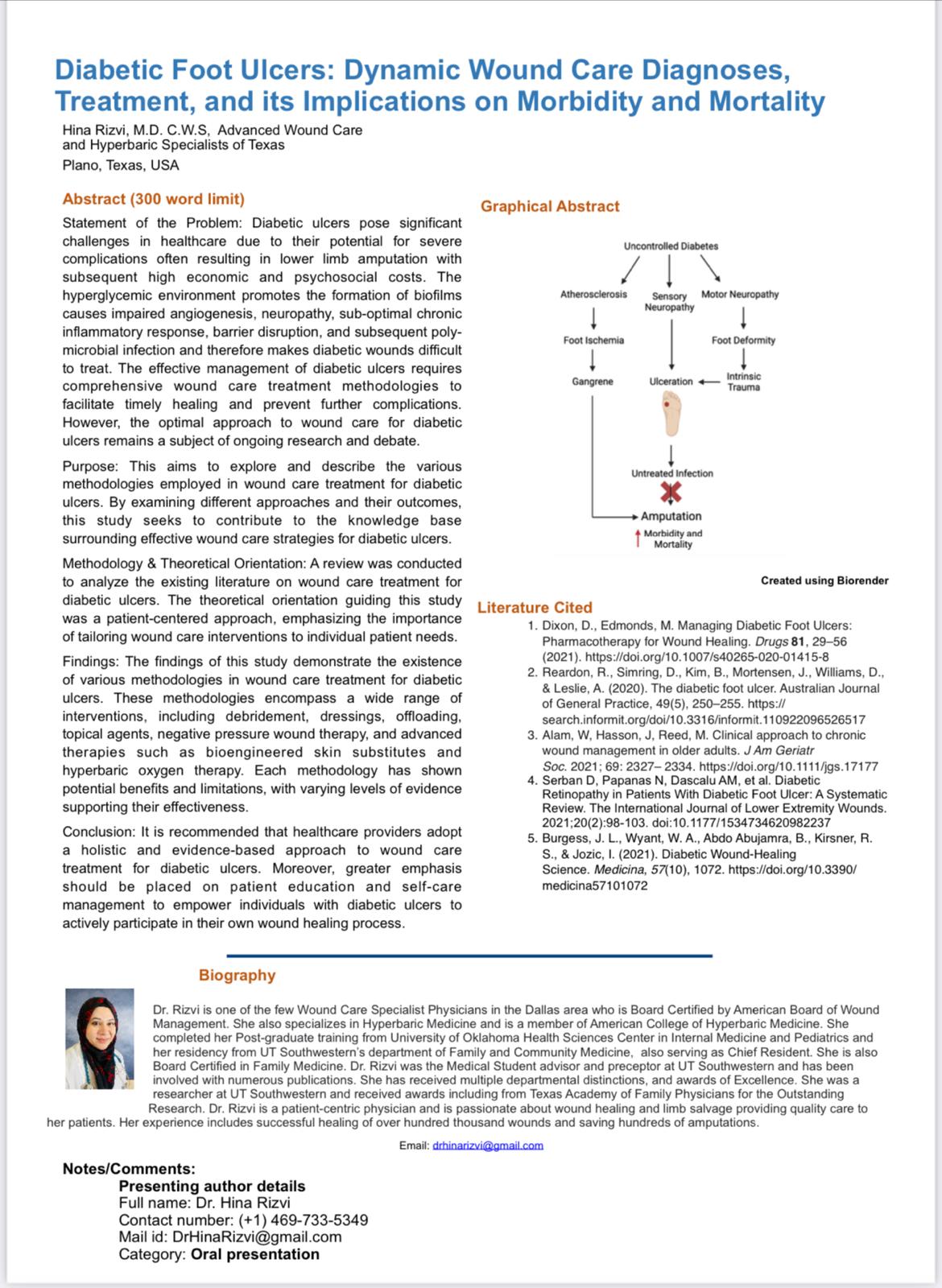
Diabetes can damage the nerves in the feet over time, a condition called peripheral neuropathy. When those nerves are dulled, a blister, a stone in a shoe, or a small cut may not register as discomfort. The injury continues, day after day, with no signal to stop and look.
Diabetes can also narrow the small blood vessels that feed the skin. Less blood flow means slower healing, so a minor break in the skin has more time to become a true ulcer. The combination of reduced sensation and reduced circulation is why a foot wound can grow significant before it is ever noticed.
This is the key idea to carry forward: with diabetes, you cannot rely on pain to tell you something is wrong. You have to look.
Early warning signs to watch for
Changes in the skin
Watch for redness that does not fade, a warm spot compared to the rest of the foot, swelling, or skin that looks shiny or discolored. A new blister or a small open area, even one that does not hurt, is a warning sign. So is skin that has become hard or cracked, especially around the heel.
Calluses over pressure points
A thick callus is not harmless. It is a sign that one spot is taking more pressure than it should, and ulcers very often form underneath calluses. If a callus develops a dark spot inside it, that can be bleeding beneath the surface and an ulcer forming. Calluses should be managed by a professional, not cut at home.
Drainage, staining, or odor
Sometimes the first thing a person notices is not on the foot at all. It is a stain on a sock or inside a shoe. Any unexplained drainage, staining, or odor means a wound should be looked for and examined promptly.
The daily foot check
A daily foot check takes about a minute and is the single most effective habit for catching problems early. Each day, ideally at the same time:
- Look at the top, bottom, sides, and heel of each foot.
- Check between every toe.
- Use a mirror, or ask someone for help, to see the soles clearly.
- Feel for warm spots and notice any swelling.
- Run a hand inside each shoe before putting it on, checking for stones or rough seams.
If eyesight or reach makes this difficult, a family member or caregiver can do the check. The point is consistency. A problem found on day one is a far easier problem than the same problem found on day thirty.
When to get help right away
Contact a wound care specialist promptly if you find an open wound, a blister, a new dark area, or skin that is broken in any way. Seek care urgently if you notice spreading redness, swelling, warmth, fever, foul odor, or drainage, because these can point to infection that needs fast treatment.
Do not wait to see whether it improves on its own. With diabetic foot wounds, time is the most important factor. Early treatment is what keeps a small ulcer from becoming a deep infection.
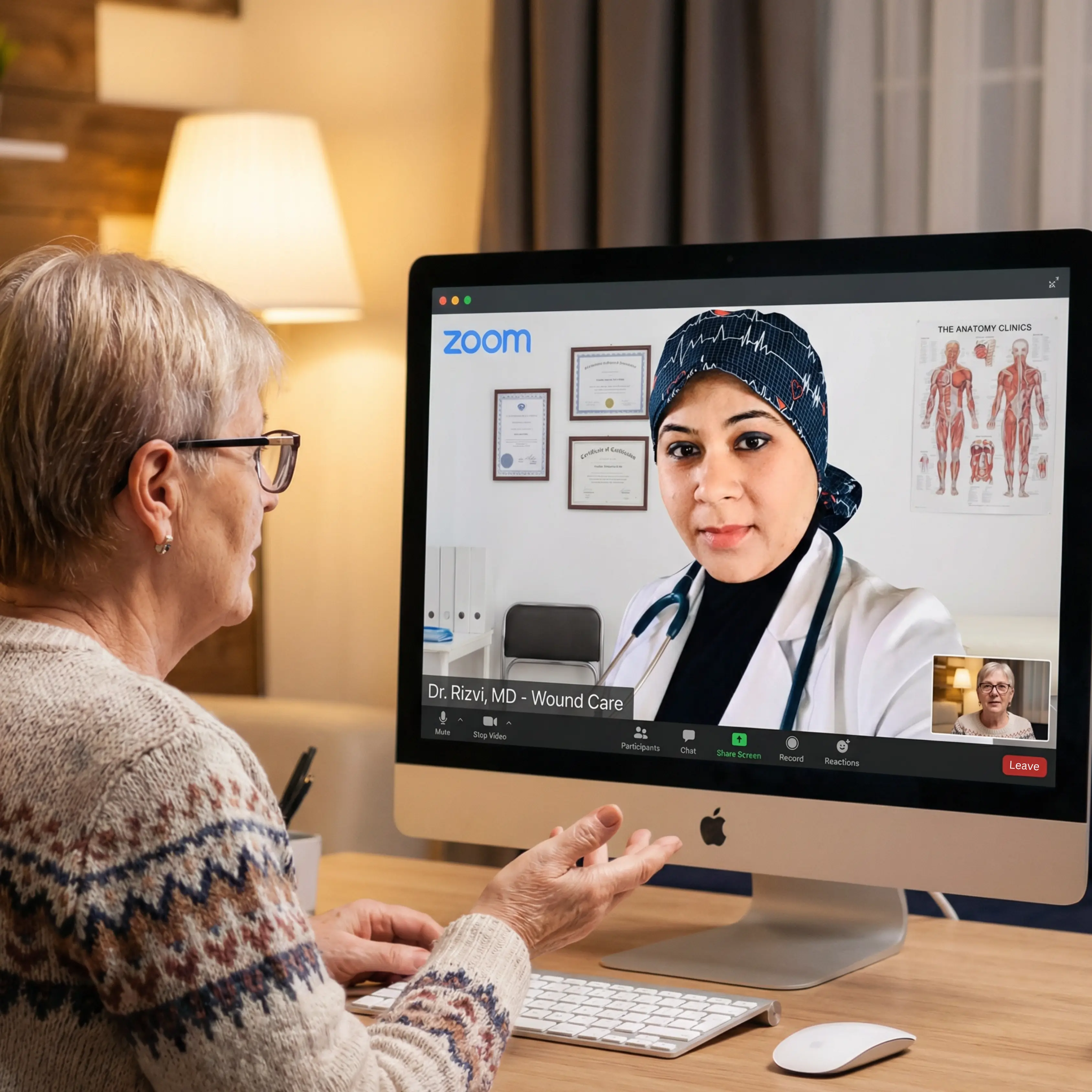
At Dr. Rizvi Wound Care in Plano, diabetic foot ulcers are evaluated and treated with same-day and next-day appointments, and telemedicine visits are available for patients across Texas. If you have diabetes and you have found anything that concerns you on your foot, that is reason enough to be seen.
Reviewed and authored by Dr. Hina Rizvi, M.D, C.W.S on April 15, 2026
About the Author
Dr. Hina Rizvi, M.D, C.W.S
Board Certified Wound Care Specialist · Dr. Rizvi Wound Care · Plano, TX
Dr. Hina Rizvi is a board-certified wound care specialist with 16+ years of experience and 100,000+ wounds healed. She treats diabetic foot ulcers, venous ulcers, gangrene, pressure ulcers, lymphedema, osteomyelitis, and complex non-healing wounds at her Plano clinic and via bedside-mobile visits across the DFW metroplex. Same/next-day appointments; most insurance and Medicare accepted.
This article is for general patient education and is not a substitute for individualized medical advice. If you have a non-healing wound or a medical concern, please contact our office or your physician for evaluation.