Caring for a Venous Leg Ulcer: Compression, Skin, and Healing Time
A venous leg ulcer is the most common type of leg wound, and it usually appears on the lower leg, often near the ankle. These wounds can be slow and frustrating, and many people have lived with one for months before getting the right treatment. With the correct approach, the great majority of venous ulcers heal.
What a venous leg ulcer is
Veins carry blood from the legs back up to the heart, working against gravity with the help of small one-way valves. When those valves weaken, blood pools in the lower leg instead of draining. The pressure builds, fluid leaks into the tissue, and the skin becomes fragile. Eventually it breaks down into an open ulcer.
This is why venous ulcers tend to come with swelling, aching that eases when the legs are raised, and skin around the wound that looks brown-stained, dry, or hardened. The wound itself is a symptom. The pressure inside the veins is the cause, and that is what treatment has to address.
Why compression is the cornerstone
Compression therapy, usually wraps or fitted stockings, is the single most important part of healing a venous ulcer. By gently squeezing the leg, compression helps the veins move blood upward, reduces swelling, and lowers the pressure that caused the wound. Studies consistently show that venous ulcers treated with proper compression heal far more reliably than those treated with dressings alone.
Compression has to be the right type and the right fit, which is why it should be set up by a clinician. It is also important to wear it consistently. A wrap that is taken off because it feels tight, then left off, cannot do its job. If compression is genuinely uncomfortable or your toes change color, that should be reported rather than simply abandoned, because the fit may need adjustment.
Daily skin and leg care
Alongside compression, day-to-day habits make a real difference:
- Elevate the legs above the level of the heart for short periods through the day to help fluid drain.
- Keep the skin around the wound moisturized, since dry, cracked skin breaks down easily. Follow your clinician's guidance on which product and where to apply it.
- Stay gently active. Walking and simple ankle movements work the calf muscle, which acts as a pump for the veins.
- Avoid long, unbroken periods of sitting or standing still.
- Keep the dressing clean and dry, and change it as instructed.
A realistic healing timeline
Venous ulcers do not close in a week, and expecting them to leads to a lot of unnecessary discouragement. With proper compression and care, many heal over a span of several weeks to a few months. Larger or longer-standing ulcers can take longer.
What matters most is the direction of travel. A wound that is gradually getting smaller, even slowly, is a wound that is healing. Your specialist will measure it over time so progress can be tracked objectively rather than guessed at.
Preventing the next ulcer
Once a venous ulcer heals, the vein problem that caused it is still present, so prevention becomes the long-term goal. For most people that means continuing to wear compression stockings, keeping up with leg elevation and movement, and caring for the skin. Some people benefit from a vascular evaluation to see whether a procedure could improve the underlying vein function. Recurrence is common when these steps stop, and very avoidable when they continue.
When to call your specialist
Reach out promptly if the wound grows, becomes more painful, or starts to drain more heavily, or if you notice spreading redness, warmth, odor, or fever. Also call if your compression feels wrong, since a poor fit can stall healing.
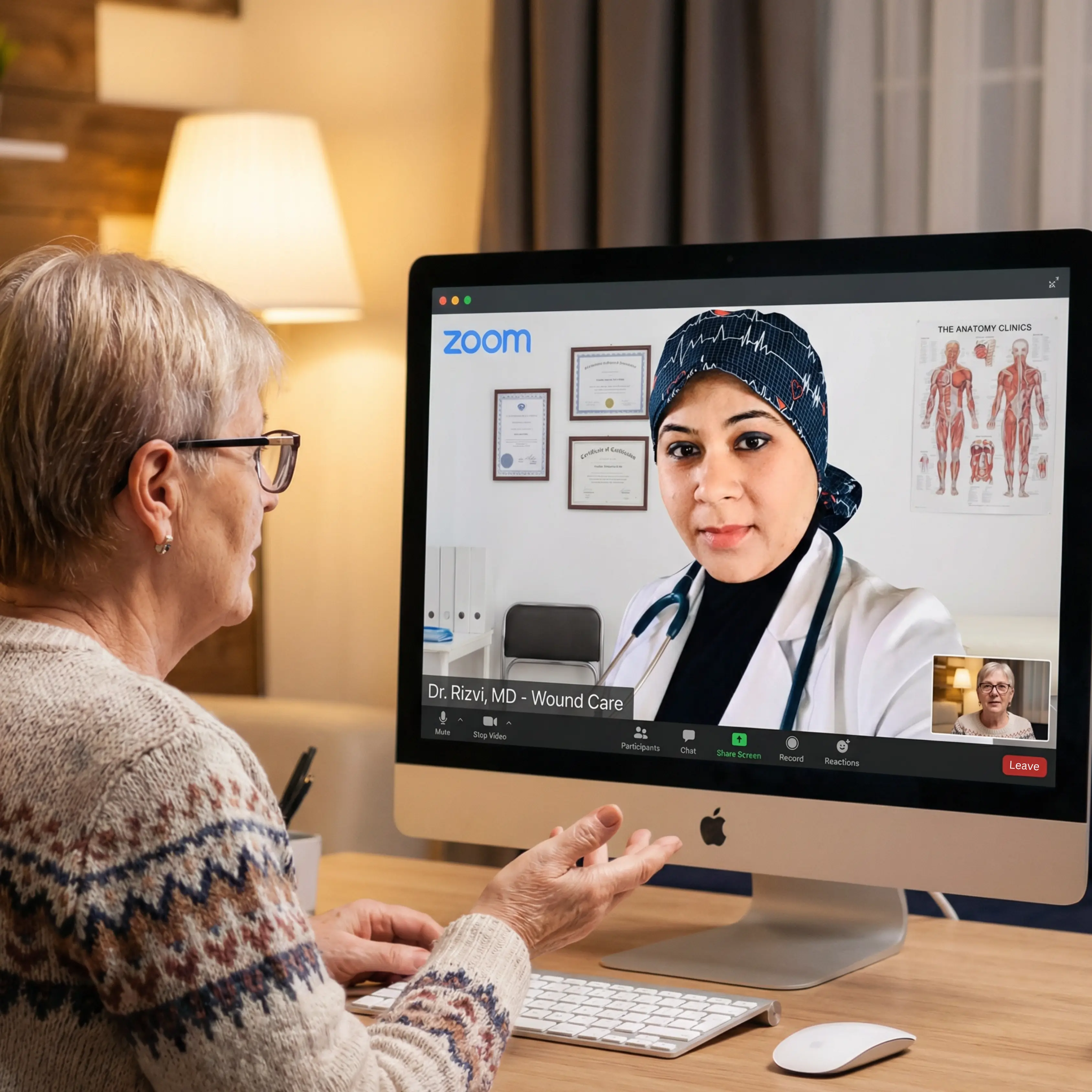
At Dr. Rizvi Wound Care in Plano, venous leg ulcers are treated with compression therapy, wound care, and a plan to prevent the next one. Same-day and next-day appointments are available, and telemedicine visits serve patients across Texas. A venous ulcer that has lingered for months is not a lost cause. It is usually a wound that has not yet had the right treatment.
Reviewed and authored by Dr. Hina Rizvi, M.D, C.W.S on March 30, 2026
About the Author
Dr. Hina Rizvi, M.D, C.W.S
Board Certified Wound Care Specialist · Dr. Rizvi Wound Care · Plano, TX
Dr. Hina Rizvi is a board-certified wound care specialist with 16+ years of experience and 100,000+ wounds healed. She treats diabetic foot ulcers, venous ulcers, gangrene, pressure ulcers, lymphedema, osteomyelitis, and complex non-healing wounds at her Plano clinic and via bedside-mobile visits across the DFW metroplex. Same/next-day appointments; most insurance and Medicare accepted.
This article is for general patient education and is not a substitute for individualized medical advice. If you have a non-healing wound or a medical concern, please contact our office or your physician for evaluation.