
Venous Stasis Ulcer Treatment in Plano: What to Expect at a Wound Clinic
If you have an open sore on your lower leg that has lingered for weeks, you may have heard it called a venous stasis ulcer, a venous ulcer, or a varicose ulcer. Whatever the label, the treatment follows a clear path at a wound clinic. This guide walks through that path visit by visit, so you know what to expect before you walk in.
Venous stasis, venous, or varicose ulcer: one wound, three names
A venous stasis ulcer, a venous ulcer, and a varicose ulcer are the same wound. All three names describe an open sore on the lower leg caused by veins that no longer move blood back toward the heart well. Blood pools in the lower leg, pressure builds, and the skin eventually breaks down, usually near the inner ankle.
"Stasis" refers to that pooling of blood. "Varicose" is used because many people with these ulcers also have visible varicose veins, though not everyone does. For a fuller explanation of why these wounds form and how to look after your leg between visits, see our guide to caring for a venous leg ulcer. This article focuses on what happens in the clinic.
What happens at the first visit
The first visit is an assessment. The specialist looks at the wound, measures it, and examines the skin around it and the rest of the leg. You will be asked how long the ulcer has been open, what has been tried, and about conditions such as diabetes. The goal is to confirm the wound is venous before treatment starts.
This matters because leg ulcers have more than one cause. A wound caused by poor arterial blood flow can look similar but needs a very different plan. Common features of a venous ulcer include irregular edges, yellow drainage, swelling that worsens through the day, and darkened, dry, or hardened skin around the wound. Bring a list of your medications and any previous test results if you have them.
Why circulation is checked before compression
Circulation is checked before compression because strong compression is unsafe when the arteries do not deliver enough blood to the leg. The usual test is the ankle-brachial index (ABI), which compares blood pressure at the ankle with blood pressure in the arm. It is quick, painless, and done alongside an exam of the pulses in your feet.
If the result shows healthy arterial flow, compression can begin. If arterial flow is reduced, the compression plan is adjusted or a different approach is needed. A vascular evaluation, usually including an ultrasound of the leg veins, also helps confirm that faulty veins are the cause. The compression therapy page explains how this check fits into the wider treatment.
When the wound needs debridement
Debridement is needed when dead tissue, yellow slough, or thick, hardened edges cover the wound bed. Removing that material gives healthy tissue room to grow and lets dressings work against a clean surface. It is done in the clinic, and how much is needed depends on what the wound looks like at each visit.
Some ulcers need it only at the start, and others need small amounts again at later visits. The skin around the ulcer often needs care too. Itchy, irritated, or scaly skin from long-term swelling is treated with moisturizers and, when appropriate, prescribed creams, because fragile surrounding skin breaks down easily. Read more about wound debridement.
Compression options: wraps first, stockings later
An open venous ulcer is usually treated with multi-layer compression wraps applied in the clinic. The wraps run from the toes to below the knee with graduated pressure, padding over bony areas, and stay on for several days between visits. Once the ulcer heals, the plan moves to fitted compression stockings worn every day to help keep it closed.
Wraps and stockings do different jobs. Wraps are applied by the care team and handle the heavy swelling of an active ulcer. Stockings are garments you put on yourself, and Dr. Rizvi can prescribe medical-grade compression stockings and coordinate with a supplier. As swelling goes down, wraps are adjusted at each change so the fit stays right. If your toes turn blue, white, or cold, go numb or tingly, or the pain under the wrap becomes severe, the wrap may be too tight. Take it off and call the clinic right away. If the clinic is closed, go to urgent care. For milder discomfort, call the clinic before changing anything yourself.
Dressings matched to the wound
The dressing under the compression is chosen for how much the wound drains. Some dressings, such as foams and alginates, soak up heavy drainage, while others add moisture to a wound that is too dry. Dressings with germ-fighting ingredients are not used routinely, and signs of infection are treated as a separate problem. The choice changes as the wound changes.
A venous ulcer often drains heavily at first and less as swelling comes down. That is why the dressing is reviewed at every visit instead of staying the same for the whole course of treatment. The right dressing protects the surrounding skin from moisture damage and keeps the wound bed in good condition for healing.
How often you come back
Expect regular follow-up visits while the ulcer is open; how often depends on your wound. At each visit the wraps come off, the wound and leg swelling are measured, the wound is cleaned and reassessed, and fresh compression is applied. Measuring every time shows whether the ulcer is getting smaller, so the plan can change if progress stalls.
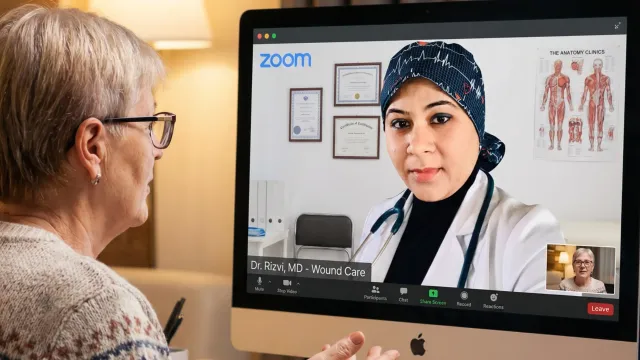
Healing a venous ulcer takes time, and steady small improvements are a good sign. Patients whose wounds are stable may be able to have some follow-ups by telemedicine, though wraps themselves are applied in the clinic. After the ulcer closes, visits become less frequent and focus on stockings, skin care, and preventing the ulcer from coming back.
When a vascular referral helps
A vascular referral helps when an ulcer is not responding to compression, keeps coming back, or when testing shows significant problems with the veins or arteries. A vein specialist can assess whether a procedure such as vein ablation would improve how the veins work. Treating the faulty veins addresses the cause, not just the wound.
Compression and good wound care remain the foundation, and many ulcers heal with them alone. Referral is a way to add treatment when the underlying vein problem is holding healing back, and it can lower the chance of a healed ulcer returning. Dr. Rizvi coordinates these referrals as part of the treatment plan.
Warning signs that need urgent care
Some changes need prompt attention rather than waiting for your next appointment. Call the clinic the same day if you notice spreading redness, warmth, more pain, a bad odor, or a sudden increase in drainage, since these can mean infection. A fever with any of these needs care that day. If the clinic is closed, go to urgent care or an ER.
Go to urgent care or an emergency room if one leg suddenly becomes swollen, painful, warm, or tender, especially in the calf. These can be signs of a blood clot in a deep vein (deep vein thrombosis, or DVT), which needs urgent evaluation. Call 911 if you have chest pain, shortness of breath, or are coughing up blood, or if you feel confused or very unwell.
Getting seen in Plano
At Dr. Rizvi Wound Care in Plano, venous ulcer treatment starts with a circulation check and moves through debridement when needed, in-clinic compression wraps, dressings matched to your wound, and regular measured follow-up. Same-day and next-day appointments are often available, and telemedicine follow-ups are an option for stable patients. If a leg ulcer has lingered for weeks, contact the clinic to arrange an assessment.
Care is provided at the Plano clinic or by telemedicine; home visits are not offered.
Reviewed and authored by Dr. Hina Rizvi, M.D, C.W.S on October 5, 2026
About the Author
Dr. Hina Rizvi, M.D, C.W.S
Board Certified Wound Care Specialist · Dr. Rizvi Wound Care · Plano, TX
Dr. Hina Rizvi is a board-certified wound care specialist with 16+ years of experience and 100,000+ wounds healed. She treats diabetic foot ulcers, venous ulcers, gangrene, pressure ulcers, lymphedema, osteomyelitis, and complex non-healing wounds at her Plano clinic and via telemedicine for patients across the DFW metroplex. Same/next-day appointments; most insurance and Medicare accepted.
This article is for general patient education and is not a substitute for individualized medical advice. If you have a non-healing wound or a medical concern, please contact our office or your physician for evaluation.