Diabetic Foot Ulcer: Should You See a Wound Care Specialist or a Podiatrist?
If you have diabetes and you have found an open sore on your foot, one of the first questions is simple: who should look at it? Many people think of a podiatrist first, and that is a reasonable instinct. Others are told to see a wound care specialist. The truth is that both are valuable, and they often work best side by side.
This article explains what each type of clinician does, when a dedicated wound specialist adds the most, and the warning signs that mean you should not wait for any appointment at all. If you are still learning what an early ulcer looks like, start with our guide to diabetic foot ulcer warning signs.
The short answer
Either a podiatrist or a wound care specialist is a good first call for a diabetic foot ulcer. The most important step is being seen promptly. A dedicated wound care specialist adds the most when an ulcer is slow to heal, infected, keeps reopening under pressure, or is linked to poor circulation.
International guidance from the International Working Group on the Diabetic Foot (IWGDF) describes diabetic foot care as team care that brings several kinds of clinicians together. In practice, that team often includes a podiatrist, a wound care physician, primary care or endocrinology, and a vascular specialist when blood flow is a concern.
What does a podiatrist do for a diabetic foot ulcer?
A podiatrist (DPM) is a doctor of podiatric medicine who specializes in the foot and ankle. For people with diabetes, podiatrists provide routine foot exams, nail and callus care, treatment of foot deformities, footwear and orthotic guidance, and in many cases foot surgery. Many podiatrists also treat diabetic foot ulcers directly.
Podiatrists are especially valuable for the structural side of foot health. Bunions, hammertoes, collapsed arches, and bony prominences all change where pressure lands on the foot, and pressure is one of the main reasons diabetic ulcers form. Regular foot care from a podiatrist is an important part of preventing ulcers in the first place.
What does a wound care specialist do?
A wound care specialist is a clinician whose practice centers on healing chronic and complex wounds anywhere on the body. For a diabetic foot ulcer, that means assessing why the wound is stalled, removing unhealthy tissue, choosing dressings, managing infection, relieving pressure, and coordinating the other specialists the patient needs.
Because chronic wounds are their daily focus, wound specialists see a wide range of difficult cases: ulcers that have been open for months, wounds with circulation problems, and wounds in patients with several medical conditions at once. Dr. Hina Rizvi, M.D, C.W.S, is a board-certified wound care specialist with more than 16 years of experience, and diabetic foot ulcers are a core part of that work. You can read more about the approach on our diabetic foot ulcers and complications page.
When does a dedicated wound specialist help most?
A dedicated wound specialist helps most when a diabetic foot ulcer is not following a normal healing path. The common situations are a wound that is not shrinking after a few weeks of good care, signs of infection, repeated breakdown from pressure, dead tissue that needs regular removal, and possible circulation problems.
The ulcer is not healing
A diabetic foot ulcer that is receiving good care should look smaller and healthier from week to week. If it has not clearly improved after a few weeks, or it is getting worse at any point, something is usually blocking healing. A wound specialist looks for the cause, whether that is pressure, infection, blood flow, blood sugar, nutrition, or tissue in the wound bed. Our article on why wounds stall covers these blockers in more detail.
There are signs of infection
Infection in a diabetic foot can move quickly, and it can reach deeper tissue or bone. Increasing redness, warmth, swelling, drainage, or odor needs prompt evaluation. A wound specialist can culture the wound, guide treatment, and arrange imaging when a deeper infection is suspected. See our pages on diabetic wound infections and bone infections (osteomyelitis).
Pressure keeps reopening the wound
Offloading means taking pressure off the ulcer so it can close. IWGDF guidance calls offloading one of the most important steps in healing an ulcer on the bottom of the foot. For many of these ulcers, it recommends a knee-high device that cannot be taken off, such as a total contact cast, as the first choice. Removable walkers and other devices are options when that is not suitable. When an ulcer heals and then reopens in the same spot, offloading is often the missing piece, and this is an area where podiatrists and wound specialists frequently collaborate.
The wound needs regular debridement
Debridement is the removal of callus, dead tissue, and debris from a wound so healthy tissue can grow. Many diabetic foot ulcers need it repeatedly over the course of treatment. In-office debridement is a routine part of wound care visits. Learn more on our wound debridement page.
Circulation may be part of the problem
Diabetes can narrow the arteries that supply the feet, and a wound without enough blood flow struggles to heal no matter how well it is dressed. A wound specialist checks pulses and blood flow, and refers to a vascular specialist when testing suggests a blockage. Coordinating that care is part of the job. Our arterial ulcers page explains the circulation side further.
Do you have to choose one or the other?
No. Most people with a diabetic foot ulcer benefit from both. A podiatrist manages the structure of the foot, footwear, and long-term prevention, while a wound care specialist focuses on getting a difficult wound to close. The two roles overlap, and good clinicians on both sides communicate.
At Dr. Rizvi Wound Care, care is coordinated with primary care, endocrinology, and podiatry where needed. If you already see a podiatrist you trust, you do not need to stop. A wound specialist can join your care team for the healing phase, then hand prevention back to the clinicians who know your feet best.
Red flags that need urgent care
Some changes in a diabetic foot should not wait for a scheduled visit. Seek urgent medical care the same day, or go to an emergency department, if you notice any of the following:
- Redness or swelling that is spreading up the foot or leg
- Fever, chills, or feeling generally unwell
- Black, gray, or dark tissue in or around the wound
- A foul odor or thick drainage from the wound
- A sudden change in pain, or new numbness, coldness, or color change in the foot
These signs can point to a serious infection or a loss of blood flow, both of which need fast treatment. If symptoms start after hours, do not wait until the clinic opens. Call 911 if you are confused, very drowsy, or having trouble breathing.
Diabetic foot ulcer care in Plano
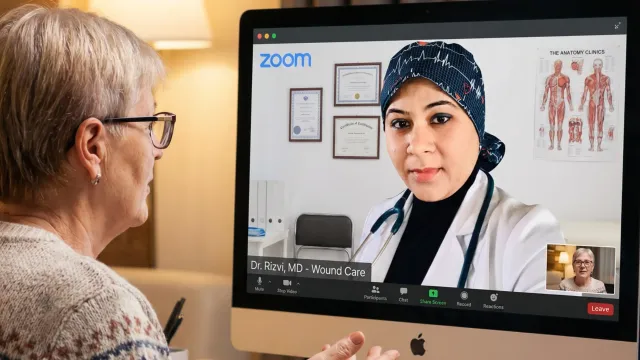
At Dr. Rizvi Wound Care in Plano, Dr. Hina Rizvi evaluates and treats diabetic foot ulcers with debridement, offloading, infection management, vascular review, and coordination with your other doctors. Same-day and next-day appointments are often available, and telemedicine is an option for stable follow-up visits. Patients are seen in the clinic or by telemedicine; home visits are not offered.
The office is open Monday through Thursday from 8 AM to 5 PM and Friday from 8 AM to 2 PM. If you have diabetes and a foot wound that is not improving, contact the clinic or call 972-491-1200 to arrange a visit.
Reviewed and authored by Dr. Hina Rizvi, M.D, C.W.S on October 5, 2026
About the Author
Dr. Hina Rizvi, M.D, C.W.S
Board Certified Wound Care Specialist · Dr. Rizvi Wound Care · Plano, TX
Dr. Hina Rizvi is a board-certified wound care specialist with 16+ years of experience and 100,000+ wounds healed. She treats diabetic foot ulcers, venous ulcers, gangrene, pressure ulcers, lymphedema, osteomyelitis, and complex non-healing wounds at her Plano clinic and via telemedicine for patients across the DFW metroplex. Same/next-day appointments; most insurance and Medicare accepted.
This article is for general patient education and is not a substitute for individualized medical advice. If you have a non-healing wound or a medical concern, please contact our office or your physician for evaluation.